Three-chuck zero-tail tube cutting for maximum material utilization.
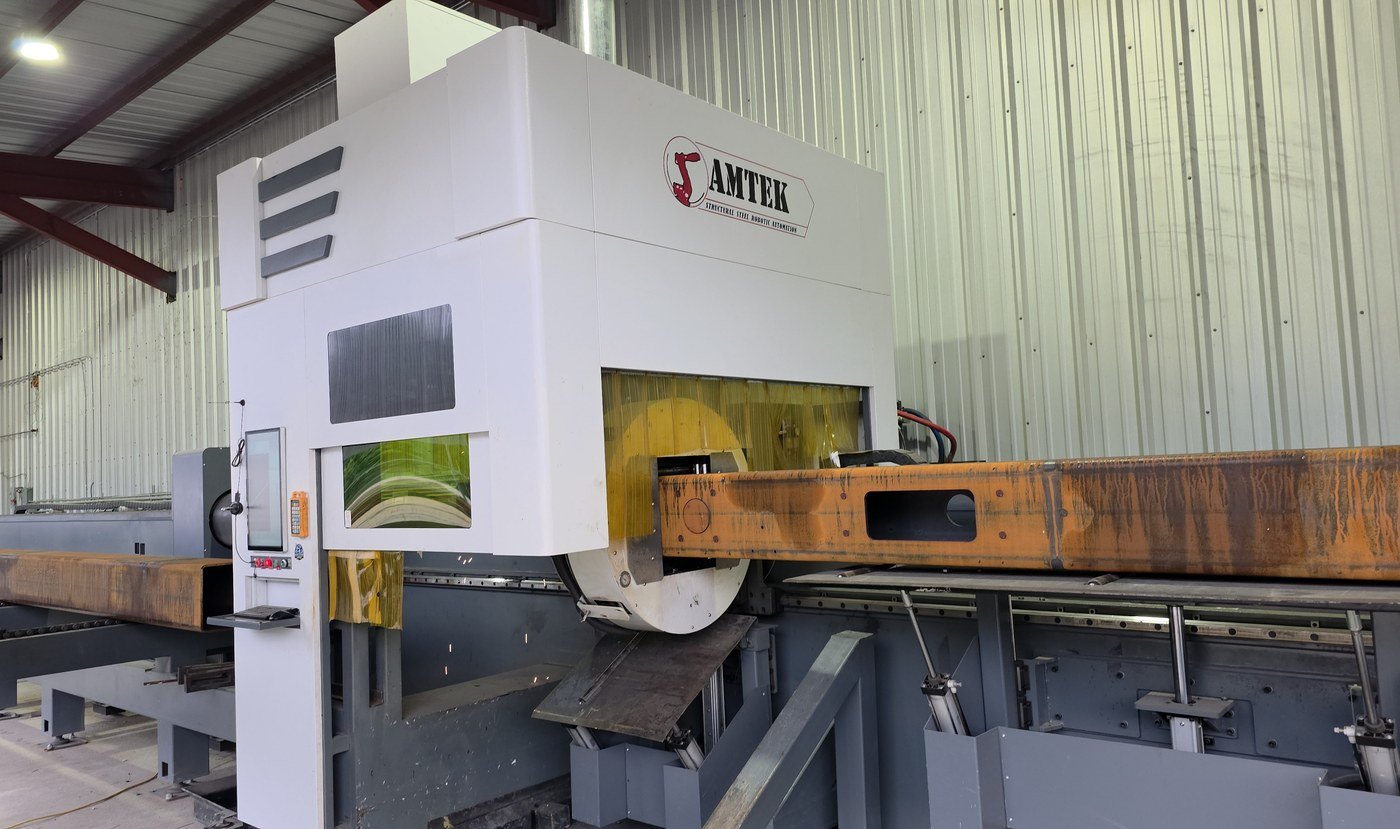
The AMTEK-TL3 3-Chuck Tube Laser Cutting Machine grips both ends of the tube so virtually no leftover material remains. It maximizes material utilization while cutting production costs.
Intelligent tube support with large load-bearing capacity and helical gear transmission keeps cutting stable and quiet — ideal for heavy-weight pipe processing.
Factory specifications for every variant of the AMTEK-TL3.
| Variant reference | AMTEK-TL3-9035 | AMTEK-TL3-12035 | AMTEK-TL3-12046 | AMTEK-TL3-12055 |
|---|---|---|---|---|
| Cutting range | 9000 mm length; Ø25-350 mm diameter | 12000 mm length; Ø25-350 mm diameter | 12000 mm length; Ø25-460 mm diameter | 12000 mm length; Ø25-550 mm diameter |
| Processable steel shapes | Round PipeChannelWide FlangeSquare/TubeAngleOther Shapes | Round PipeChannelWide FlangeSquare/TubeAngleOther Shapes | Round PipeChannelWide FlangeSquare/TubeAngleOther Shapes | Round PipeChannelWide FlangeSquare/TubeAngleOther Shapes |
| Laser power | 6000W-40000W | 6000W-40000W | 6000W-40000W | 6000W-40000W |
| Repeat positioning accuracy | ±0.05mm/m | ±0.05mm/m | ±0.05mm/m | ±0.05mm/m |
What it is, how it works, and how to choose the right machine.
A tube laser cutting machine — also called a laser tube cutter or CNC fiber tube laser — is a specialized system built to cut metal pipe, tube, and structural profiles. Where a flatbed laser cuts sheet metal, a tube laser uses powered rotary chucks and CNC motion to rotate and feed the workpiece under a high-power fiber laser beam, cutting the full circumference in a single setup.
It handles round, square, and rectangular tube plus open profiles — angle, channel, and I/H beams — in varying wall thicknesses, making it one of the most versatile machines in a fabrication shop:
Because the process is non-contact, there is no tool wear and no mechanical force to deform thin-wall tube — just fast, repeatable cuts with minimal waste.
For cutting metal tube and profiles, fiber laser is the productivity leader. How it compares:
| Feature | Fiber Laser Cutting | Plasma Cutting | Waterjet |
|---|---|---|---|
| Cutting speed | Very high | High | Moderate to low |
| Precision | Excellent | Moderate | High |
| Material compatibility | Best for metals — steel, stainless, aluminum, brass, copper | Metals, especially thick steel | Almost any material — metal, stone, glass, plastics |
| Operating cost | Low | Moderate | High |
| Maintenance | Low | Moderate | High |
| Edge quality | Clean, smooth edges | Rough — often needs cleanup | Very clean, no heat input |
| Heat-affected zone | Minimal | Significant | None |
| Initial investment | High | Moderate | Very high |
| Consumables | Low | Moderate | High (abrasive required) |
| Ease of automation | High | Moderate | Moderate |
| Environmental impact | Low — minimal fumes and waste | Moderate — fume extraction needed | High — water and abrasive consumption |
Tube lasers come in 2, 3, and 4-chuck configurations. Each additional chuck is another support point along the tube — and support is what keeps long, heavy, or large-diameter tube accurate:
Laser wattage sets the balance of cutting speed, thickness capacity, and cost:
The AMTEK-TL3 is configurable from 6kW to 40kW, so power can be matched to your material mix. One tip when sizing: square and rectangular tube needs extra power at the corners, where the effective thickness is greater than the wall — size for the corner, not the flat.
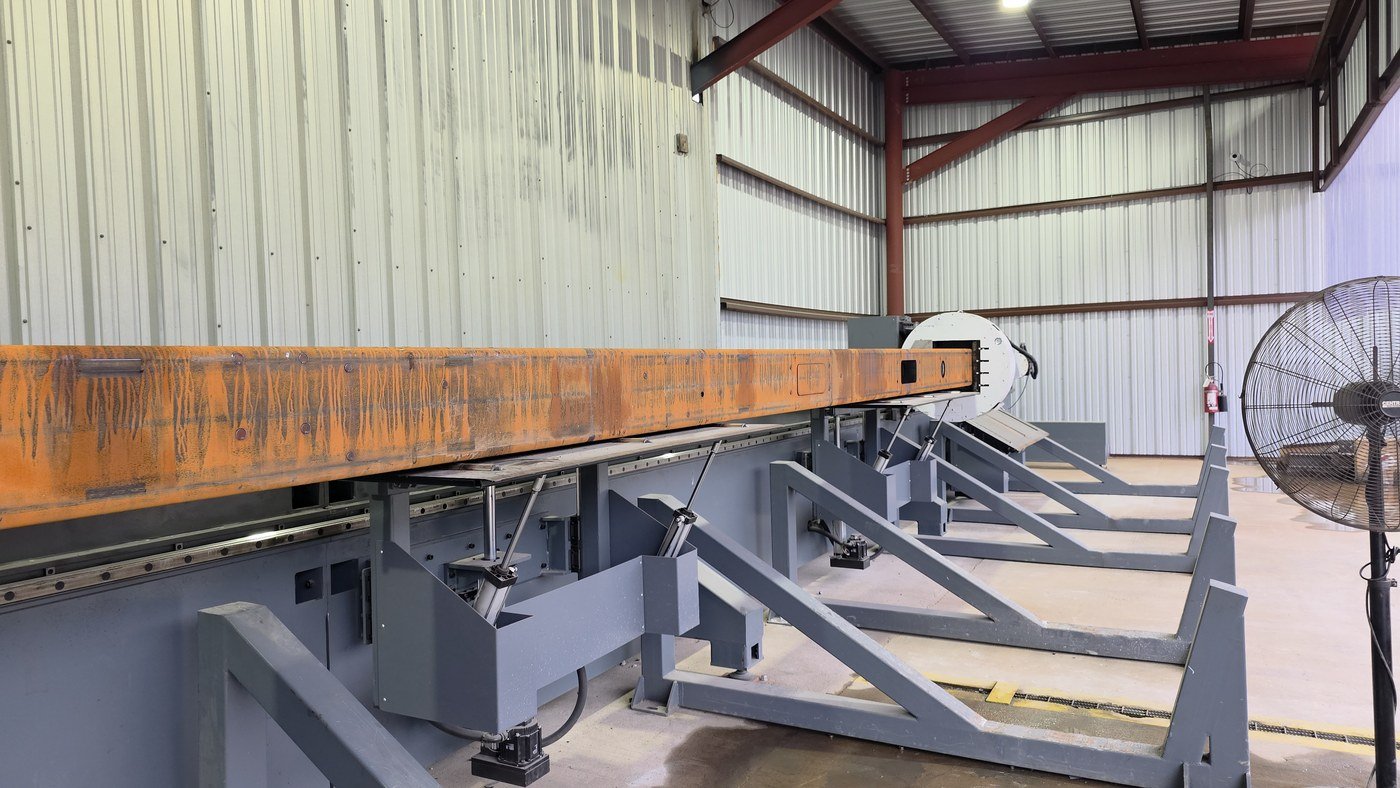
Full-length tube staged on the heavy-duty support conveyor, feeding smoothly into the cutting zone for continuous, unattended production.
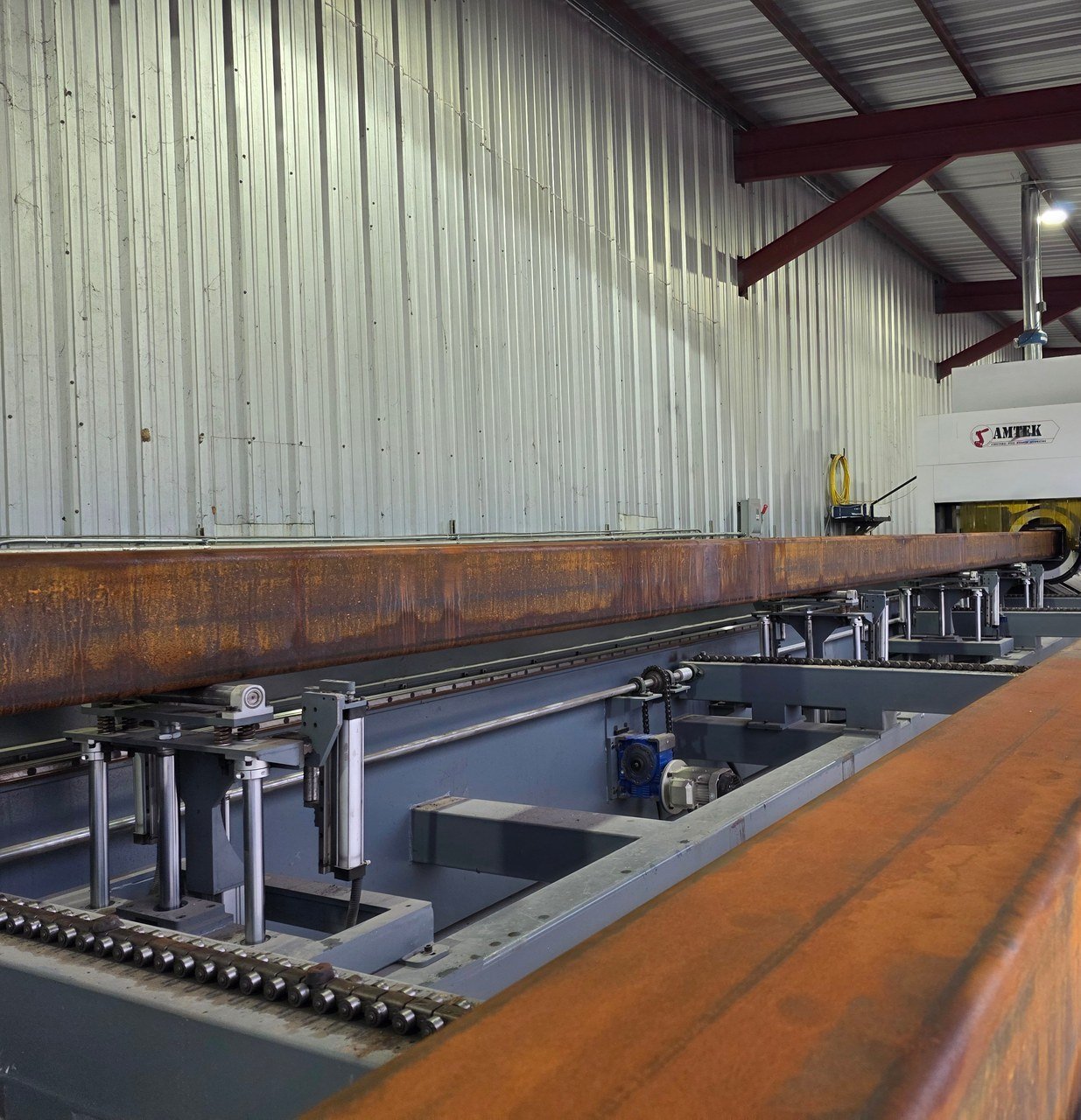
A long structural tube entering the AMTEK cutting head — the three-chuck system grips and positions it for precise, zero-tail cutting.
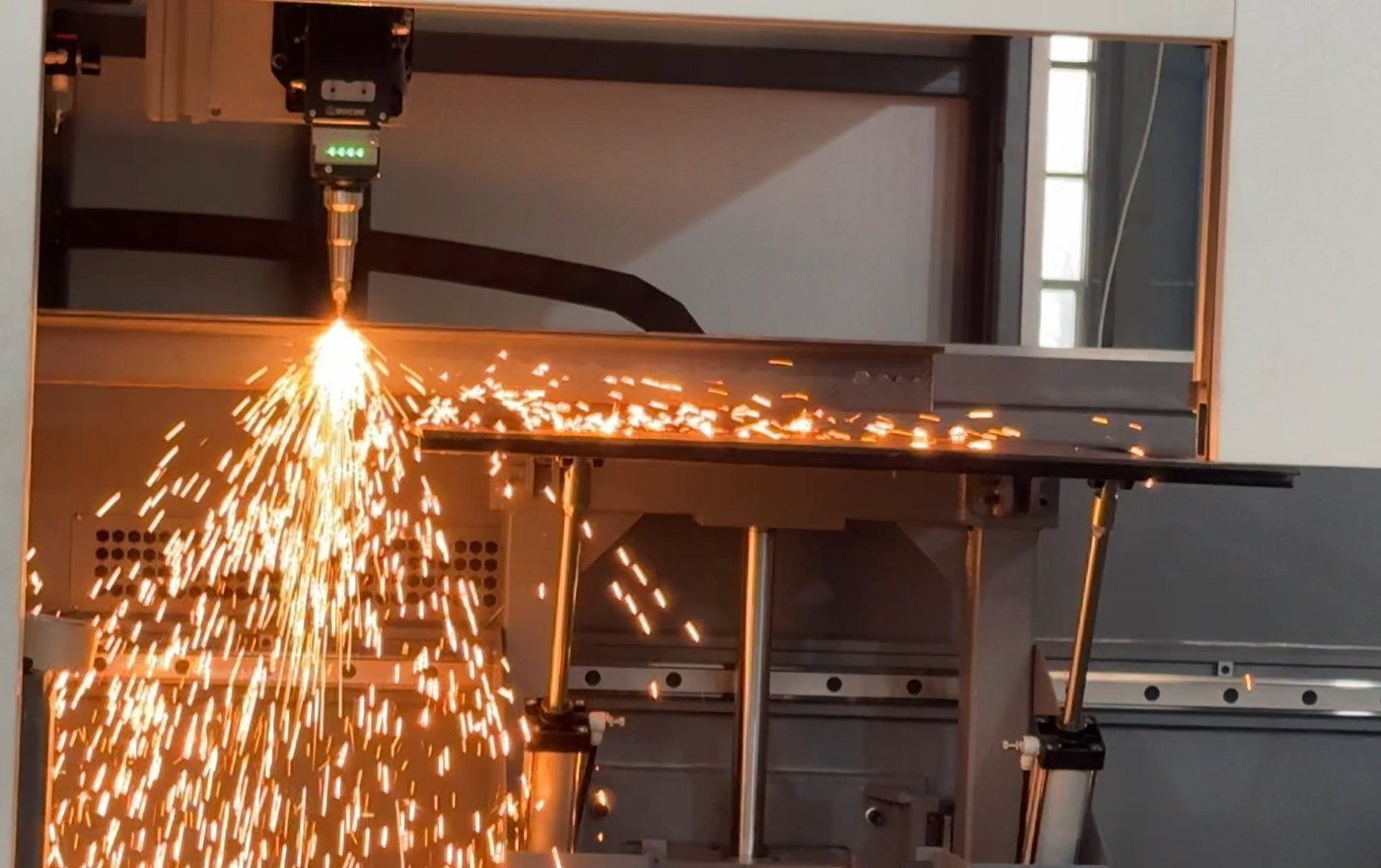
The fiber laser head at full power — a shower of sparks as it slices through heavy-wall tube with speed and precision.
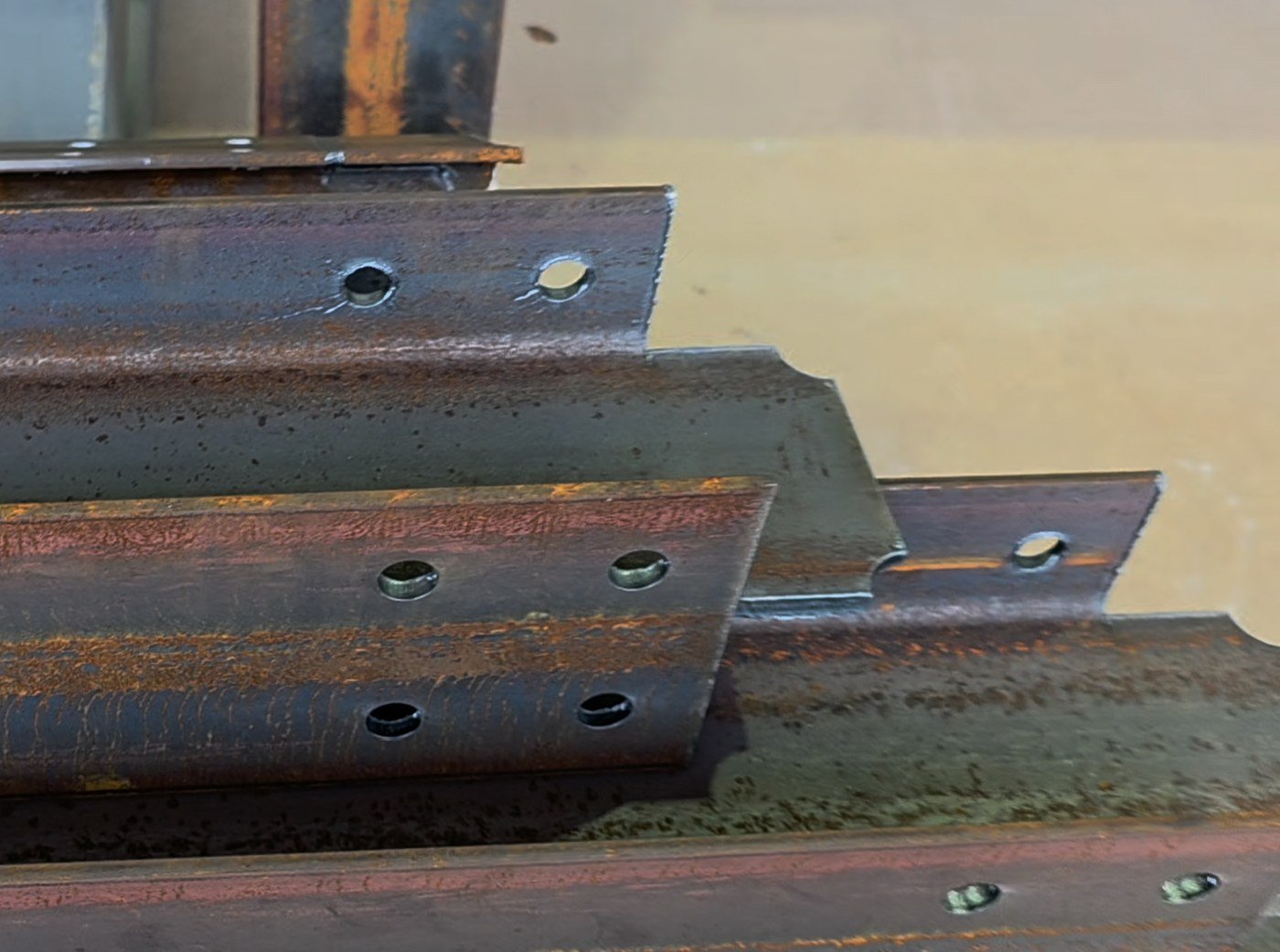
Finished tube ends with crisp edges and clean pierced holes — parts come off the machine ready for assembly, no secondary work needed.
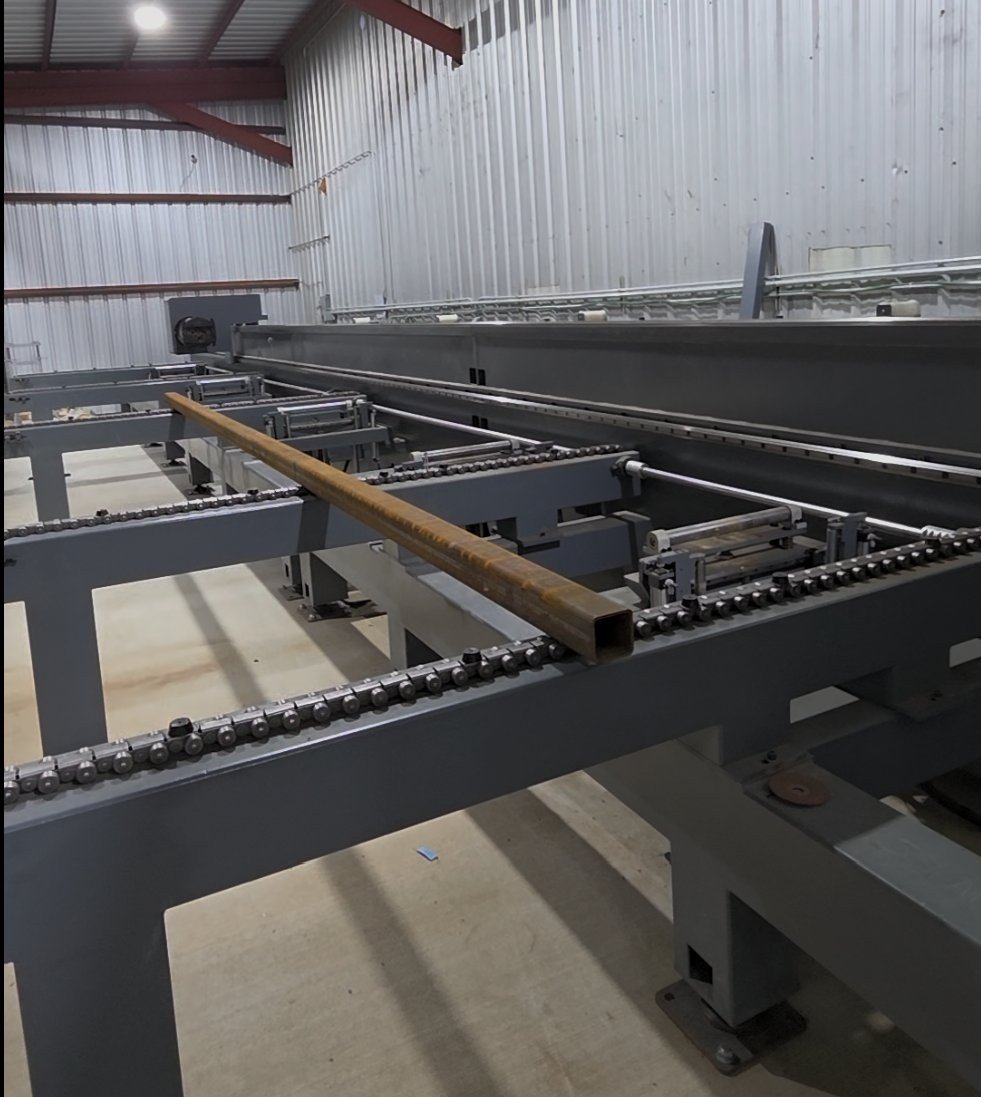
Raw tube staged on the loading conveyor, feeding automatically into the cutting zone for continuous, unattended production.
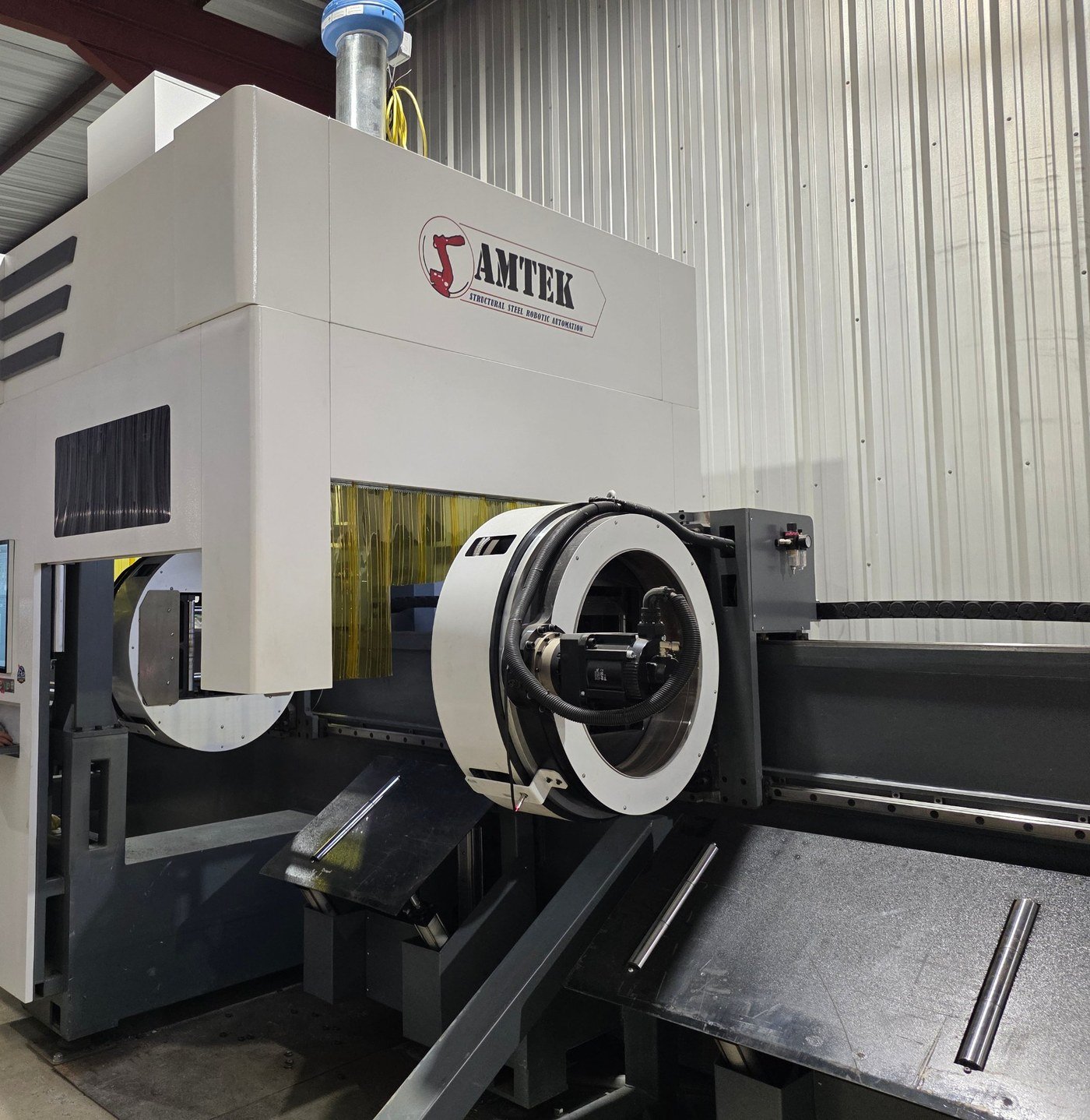
The three-chuck clamping system and operator control station — the full cut cycle is managed from the panel with the AMTEK control interface.
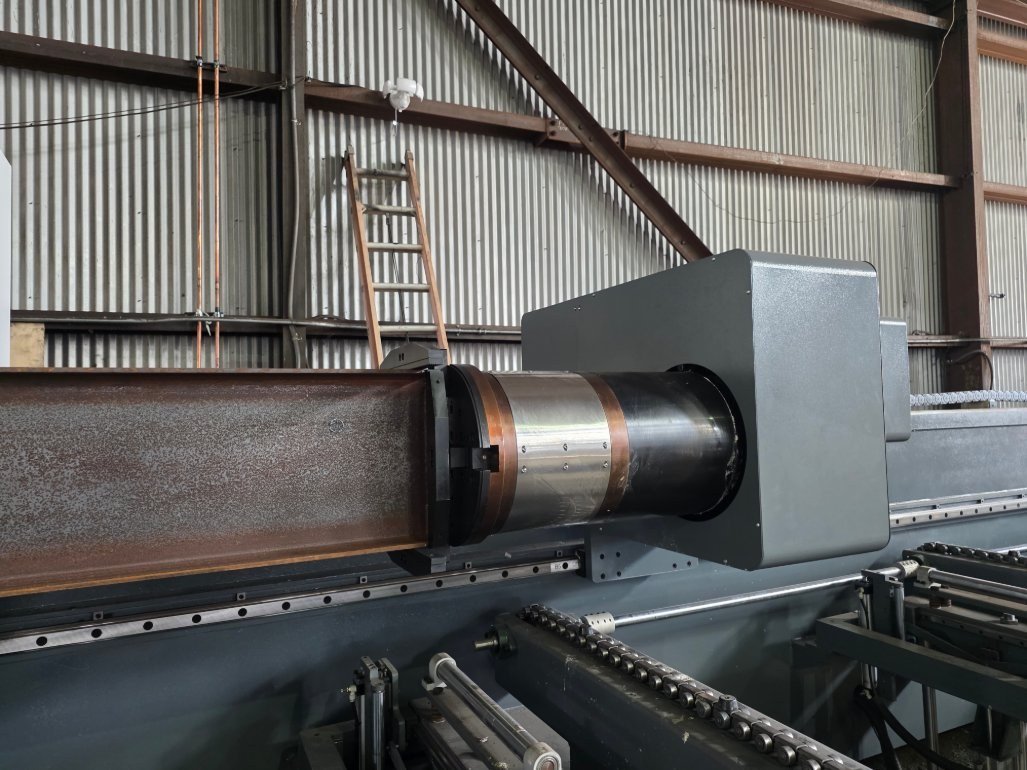
Close-up of the chuck gripping the tube — adjustable clamping force holds any wall thickness securely for true zero-tail cutting.
Zero-tail tube laser cutting grips both ends of the tube so almost no material is left over at the end of the cut. The AMTEK-TL3's three-chuck system maximizes material utilization and cuts raw material cost per part.
A 2-chuck tube laser clamps the tube at two points, while a 3-chuck machine like the AMTEK-TL3 adds a third chuck for superior support of long, heavy-wall tube — delivering true zero-tail cutting and greater stability on large diameters.
The AMTEK-TL3 processes tube from 25 mm up to 550 mm in diameter and up to 12000 mm long, with fiber laser power from 6kW to 40kW depending on the variant.
Tubes are clamped in CNC rotary chucks that center and rotate the workpiece while a fiber laser cutting head travels along its length. The CNC program coordinates rotation and linear motion to cut profiles, holes, slots, and cut-to-length features in one non-contact pass — with automatic loading and unloading for continuous production.
It depends on wall thickness and material: 1–6 kW suits thin-wall tube, 12–20 kW covers most job-shop work, and 30 kW and up is for thick-wall sections and high-volume output. The AMTEK-TL3 is configurable from 6kW to 40kW. Size for the corners on square and rectangular tube, where the effective thickness exceeds the wall.