Copes, notches, holes, and bevels in structural steel — all in one setup.
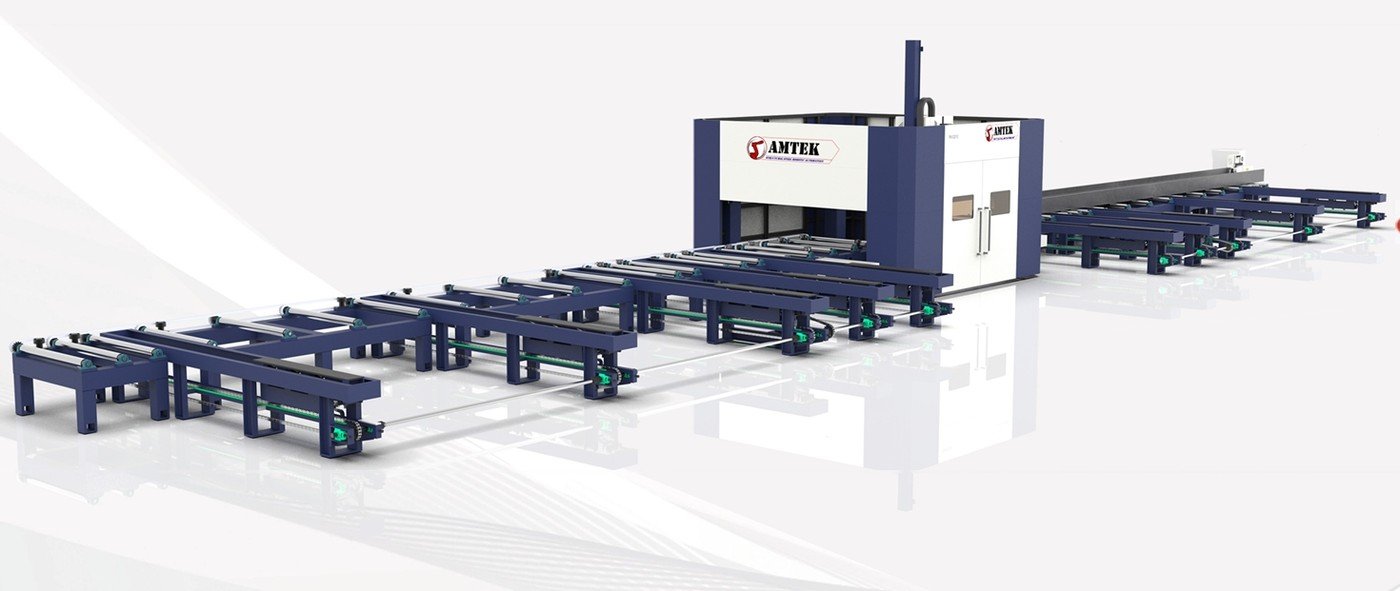
The AMTEK-LC Laser Coping Machine brings structural steel processing into a single automated setup. Instead of shuttling heavy members between a saw, a drill line, and a manual coping station — handling every beam five times with a crew at each stop — the LC cuts each piece to length and produces every connection feature in one clamping, straight from the detailer's digital file.
With 20kW, 30kW, or 40kW of fiber laser power, it processes steel beams, channels, angles, and rectangular tubes up to 18000 mm (60 ft) long. Because every cope, hole, slot, and bevel is cut in one coordinate space, connections fit exactly when the structure is erected — no rework, no surprises in the field.
Factory specifications for every variant of the AMTEK-LC.
| Parameter | Specification |
|---|---|
| Laser source | 20kW / 30kW / 40kW fiber laser |
| Processable steel shapes | BeamChannelAngleRect. tube |
| Maximum material size | 1000 mm (38 in), 600 mm (24 in), 18000 mm (60 ft) in length |
| Power requirement | 480VAC, 3-phase |
The numbers, the capabilities, and the ROI case — researched from across the industry.
Look at how a beam travels through a traditional structural shop: saw → drill line → coping station (hand layout, torch, grinder) → layout table → weld prep. Every arrow is another crane pick, another operator, another setup — and another chance for a mislocated hole or a miscut cope to become expensive rework.
A laser coping machine collapses that entire chain into a single CNC cell. The profile indexes through once while a multi-axis fiber-laser head cuts it to length and produces every connection feature in one setup — end copes, flange and web notches, bolt-hole patterns, slots, skewed and miter cuts, weld bevels, plus scribing and part marking — straight from the detailer's digital file. One handling, one program, one operator — and a nearly weld-ready part comes out.
Published fabricator case studies and manufacturer figures on automated coping cells report:
This is the objection every fabricator raises, and the answer is in the code: AISC Specification §M2.5 explicitly permits thermally cut bolt holes, and the AISC glossary defines "thermally cut" as gas, plasma, or laser cutting. Laser-cut connections go straight to erection. (One caveat: some project specifications — particularly for bridges — may still call for drilled or punched holes, so check the job spec.)
Throughput figures above are published industry case-study and manufacturer claims for automated coping cells generally, cited to show what the technology delivers — not AMTEK-LC test data. The AMTEK-LC's own specifications are listed in the Technical Parameters table above: 20kW / 30kW / 40kW fiber laser, beams, channels, angles and rectangular tubes to 18000 mm long, 480VAC 3-phase.
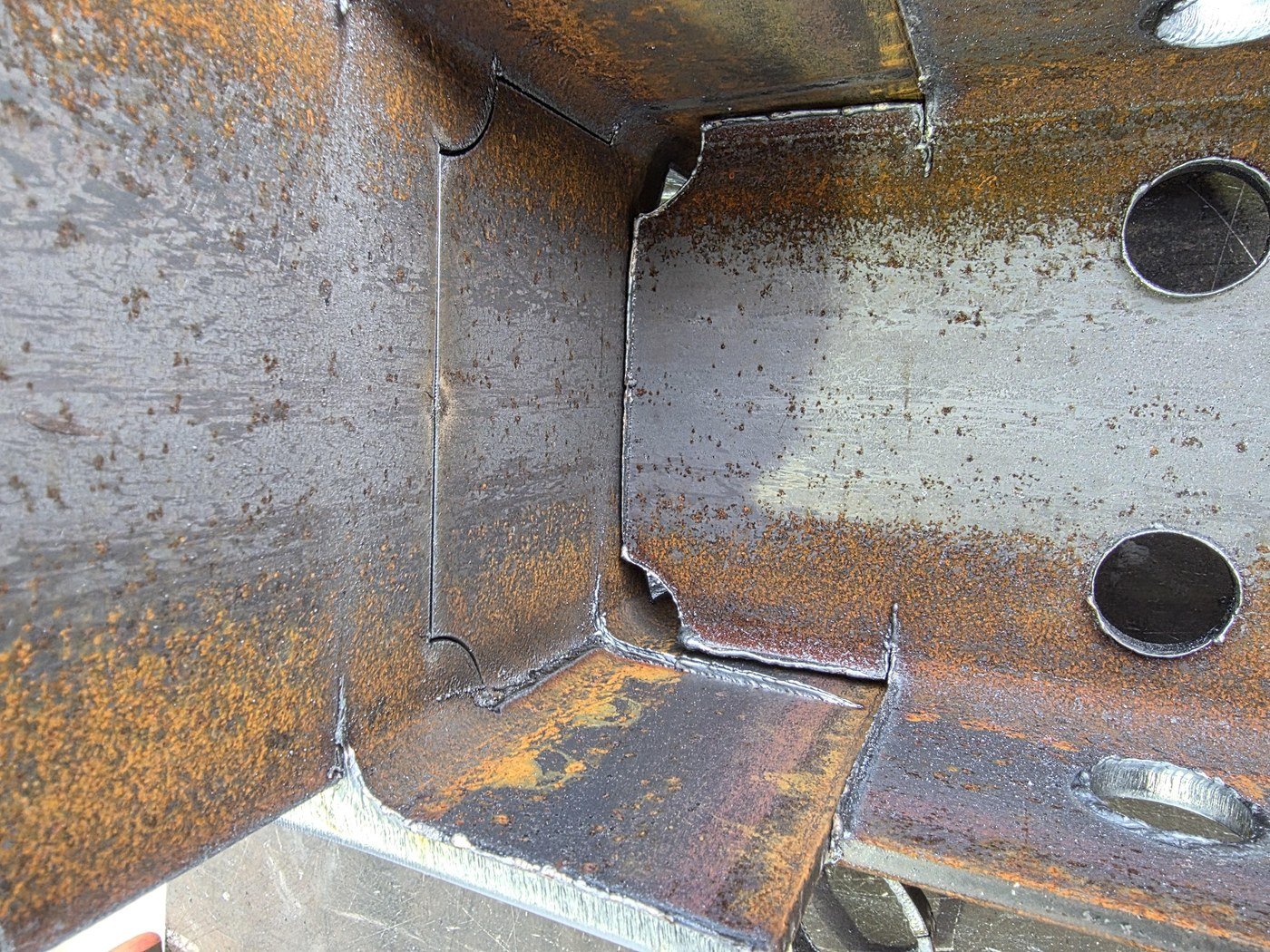
Coped beam end with pierced holes and notches — connection-ready in a single setup, no secondary operations.
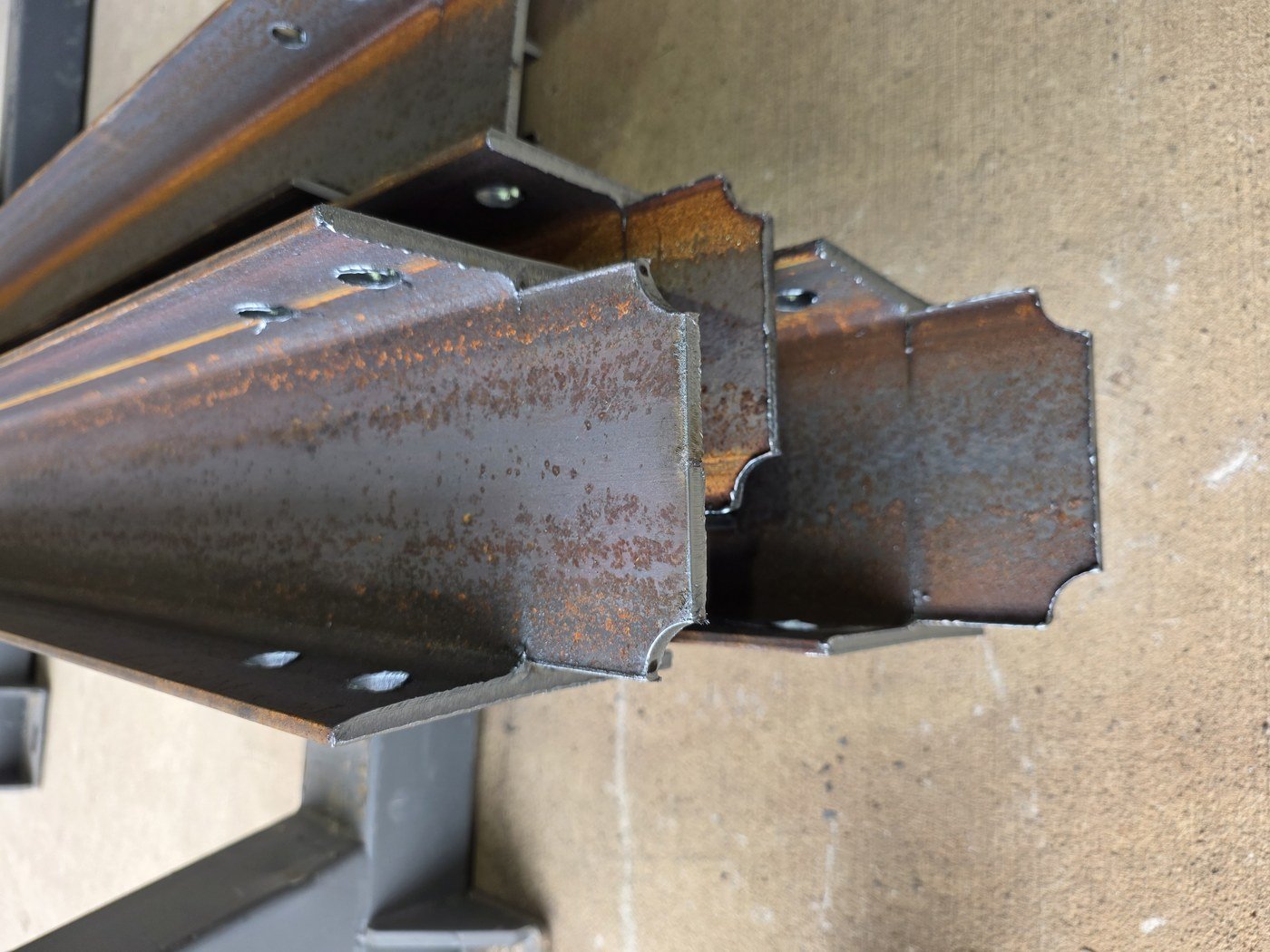
Notched channel ends with clean bolt holes, cut precisely and ready for assembly.
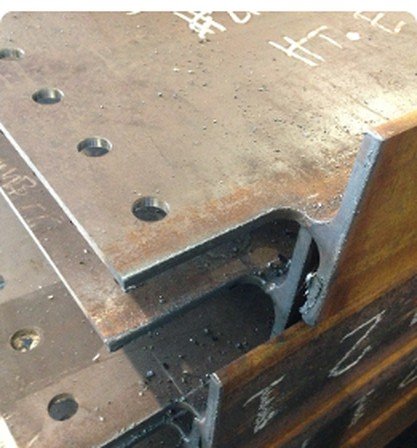
End copes cut clean and precise — beam ends notched to fit around connecting members.
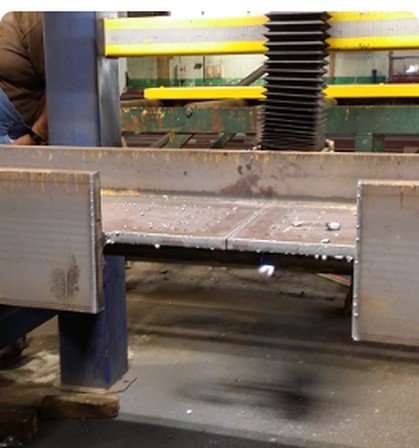
Double copes with cut off — both flanges coped and the member cut to length in a single operation.
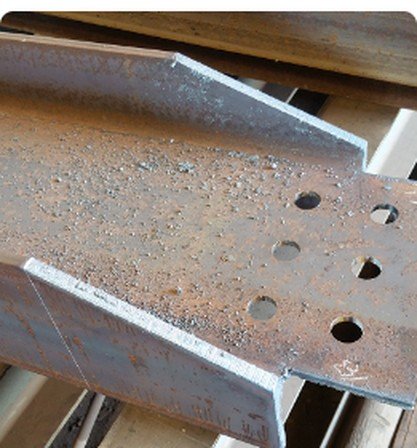
Slanted flange cuts — angled cope geometry for skewed connections, cut exactly to the digital profile.
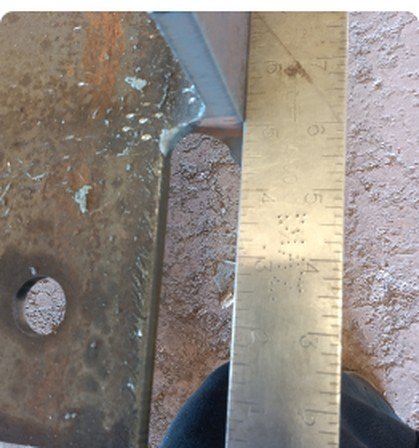
Tight copes — close-tolerance notches that fit snugly around the supporting member.
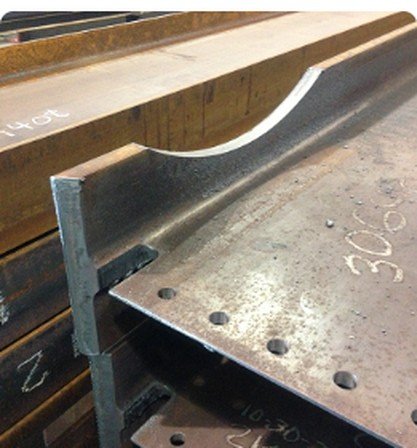
Dog bone cuts — radiused flange reductions for moment-frame connections.
A laser coper — or laser coping machine — uses a high-power fiber laser to cut copes, notches, bolt holes, slots, and weld bevels in structural steel members. It replaces manual layout, sawing, and drilling with a single automated, highly accurate process.
The AMTEK-LC processes steel beams, steel channels, steel angles, and steel rectangular tubes up to 1000 mm (38 in) / 600 mm (24 in) in cross-section and 18000 mm (60 ft) long.
A beam coping machine cuts each member to length and produces connection-ready features: copes, flange and web notches, round and slotted holes, shaped openings, and weld bevels — all in one clamping, straight from the digital part file.
Yes. AISC Specification §M2.5 explicitly permits thermally cut bolt holes, and the AISC glossary defines ‘thermally cut’ as gas, plasma, or laser cutting. Note that some project specifications — particularly for bridges — may still require drilled or punched holes, so always check the job spec.
Published fabricator case studies report dramatic gains: one shop cut about 1 hour of manual layout, coping, and drilling (10 holes) to roughly 10 minutes on an automated coping cell (FFJournal), and dealers report clients seeing 3–5× faster coping with up to 70% fewer labor hours per project. Your results depend on profile mix and feature count.
Both automate the coper's job, but the laser's finer beam cuts tighter details — small holes, sharp inside corners, full-tongue copes flush to the flange without the overcut that can leave stress risers — with a much smaller heat-affected zone and cleaner edges. Plasma systems cost less up front; laser wins on precision, edge quality, and detail.